
The Long Journey of a Belgian Block
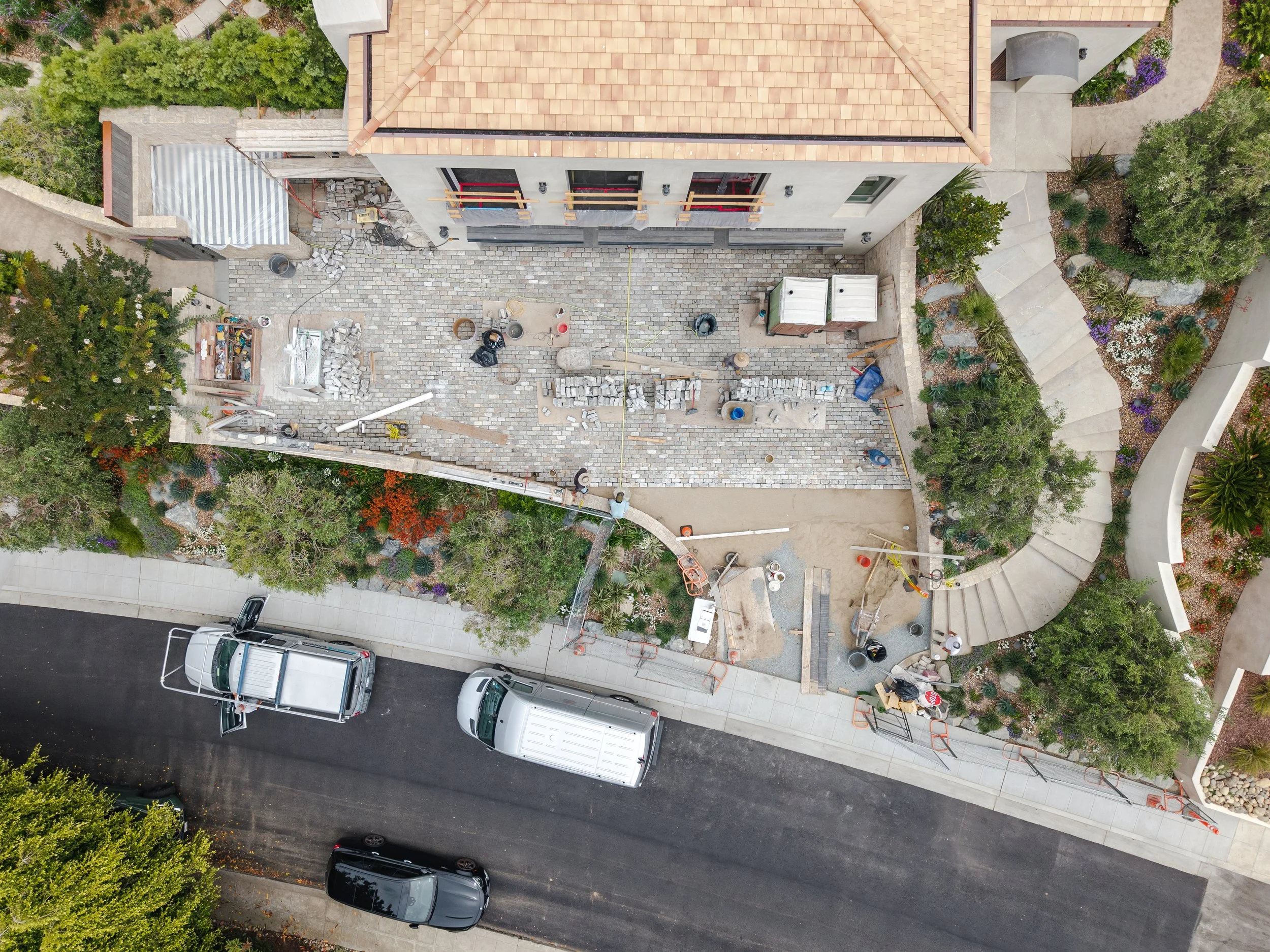
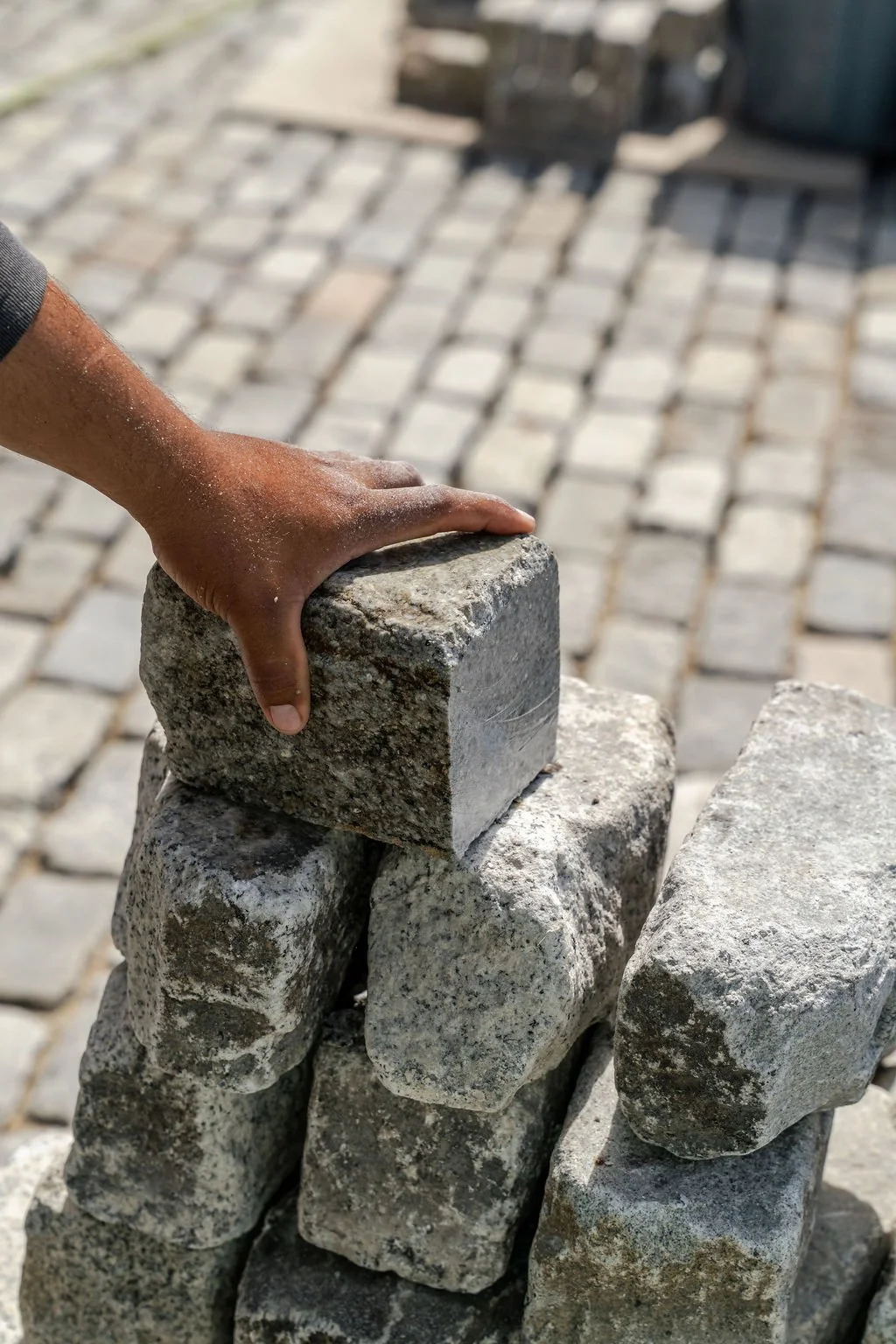
From Dutch Ships to a California Home
There is a driveway entrance on a current West Coast General Building Contractors project that has been over a century in the making. The granite blocks that pave it began their journey in Belgium, crossed the Atlantic in the hulls of Dutch cargo ships as ballast weight, were offloaded onto the docks of New York, repurposed to pave its streets and commercial corridors, and were eventually salvaged — irregular, weathered, and irreplaceable — and brought to California. That provenance alone would make them remarkable.
Every Block is Unique
Belgian blocks (or Belgian granite setts as they are traditionally known) are not a uniform material. Each one varies in dimension, weight, and profile, shaped by the original quarrying process and further worn by centuries of use underfoot. There is no standard cut, no consistent size, no shortcut to installation.
Every single block on this project was individually measured and hand-cut to fit its precise position in the driveway. An extensive process that required exceptional skill, patience, and an understanding of stone that is increasingly rare.
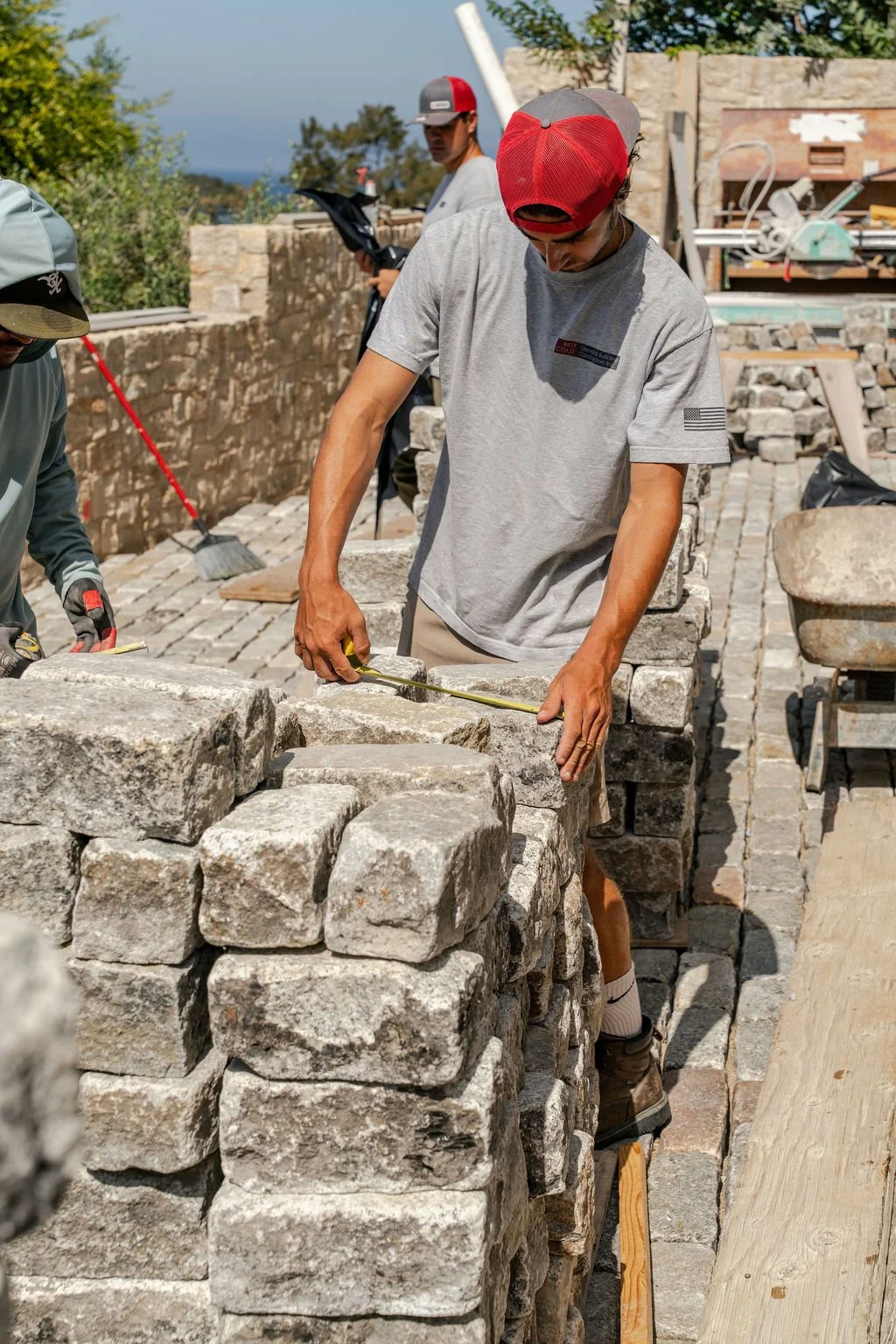
Teams had to painstakingly measure each block.
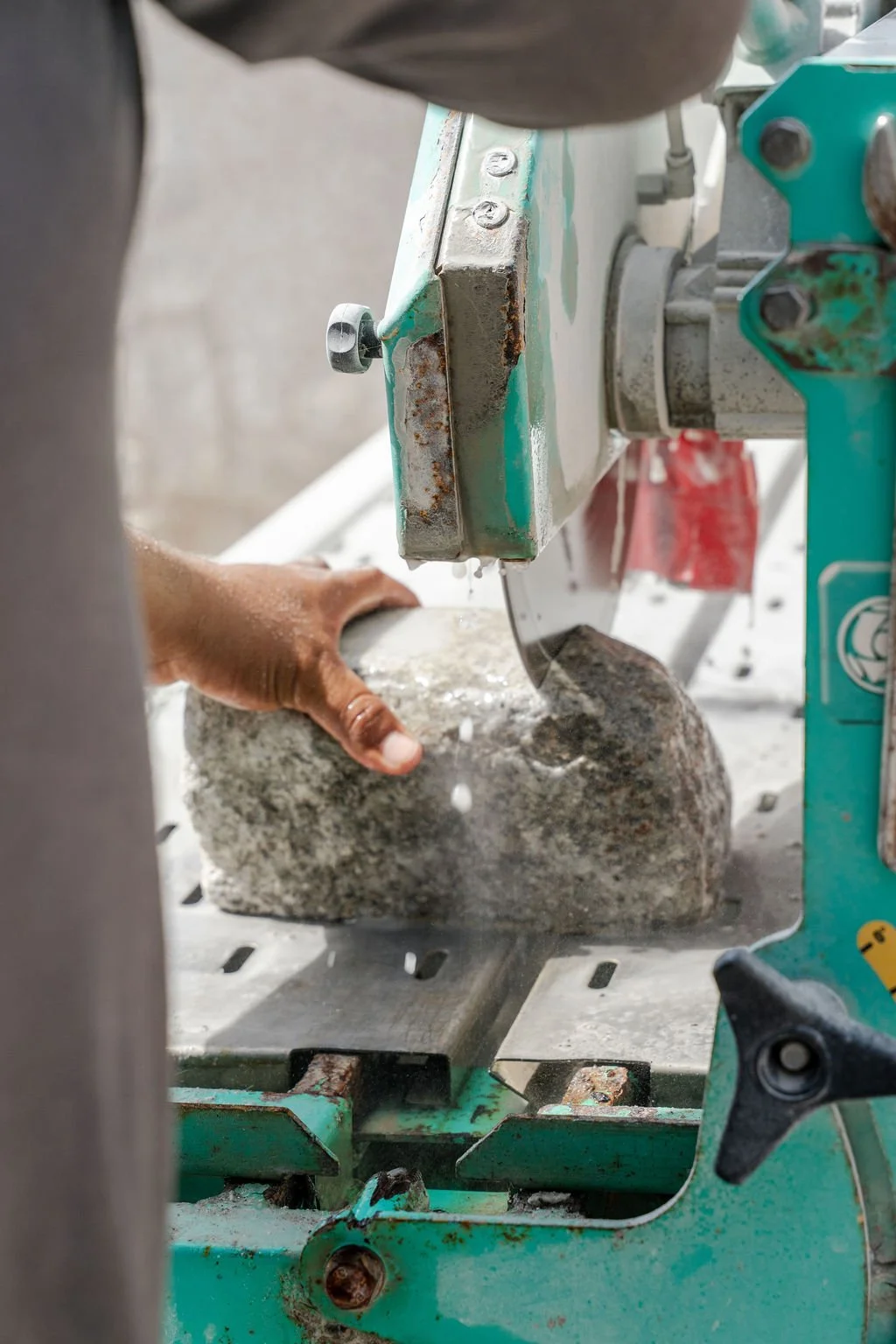
They were then carefully cut and put into place.
What It Means To Build Something Truly Custom
A material like this doesn't arrive on a project by accident. It arrives through a conversation, between architect and client, between designer and builder, between vision and reality. Someone had to imagine it. Someone had to source it. Someone had to work through the considerable challenges of specifying a salvaged material with no uniform dimension, no consistent profile, and no margin for error in a setting that demanded perfection.
That conversation is at the heart of how West Coast GBC approaches every project. We are one part of a collaboration that includes architects, interior designers, landscape architects, clients, and the craftsmen whose hands ultimately bring every decision to life. The Belgian block driveway is a product of all of those voices working in concert, each one contributing something the others couldn't provide alone.
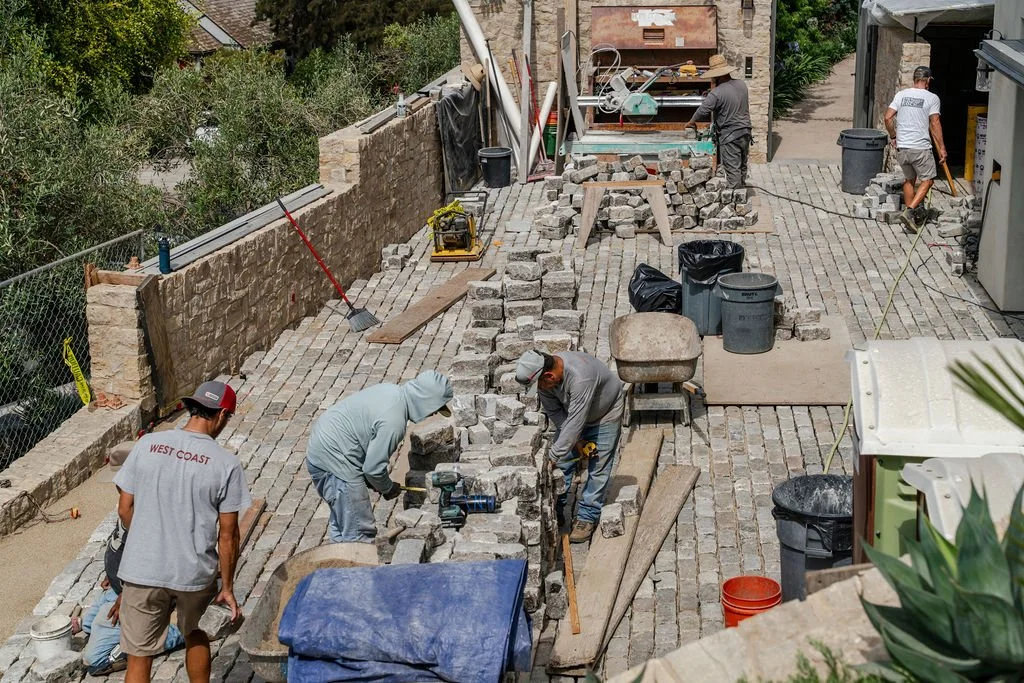
The client had to want it. The architect had to specify it. The craftsmen had to possess the skill and patience to execute it. And everyone involved had to be willing to work through the complications that come with a material this irregular, this ancient, and this uncompromising.
What emerges from that process is something no single decision could have produced. A driveway — or more precisely, an entrance — that carries centuries of history beneath your feet. That stops you before you have even reached the door. That rewards the kind of attention most people never think to give a surface they simply drive across.
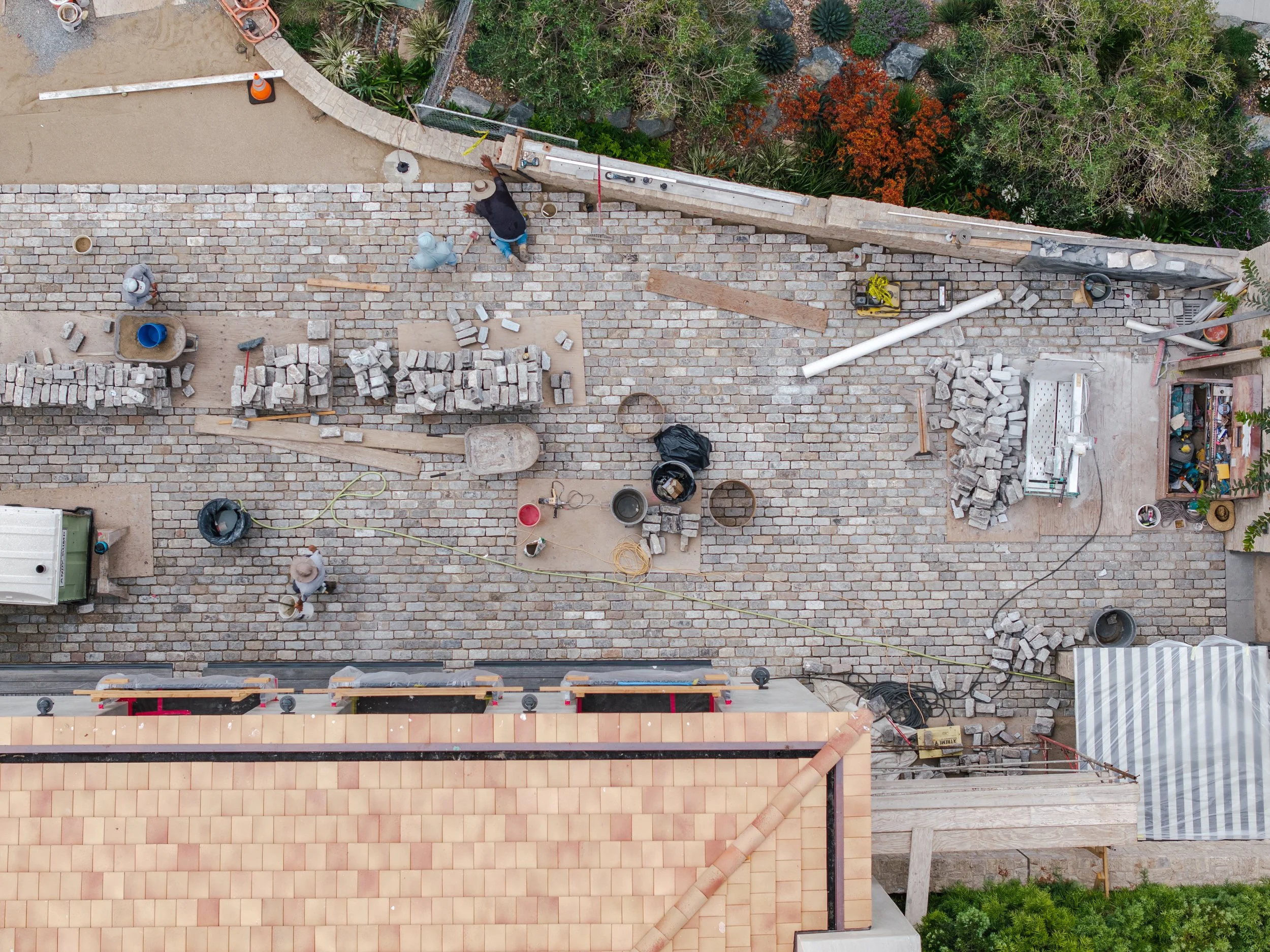
The Craft Behind the Stone
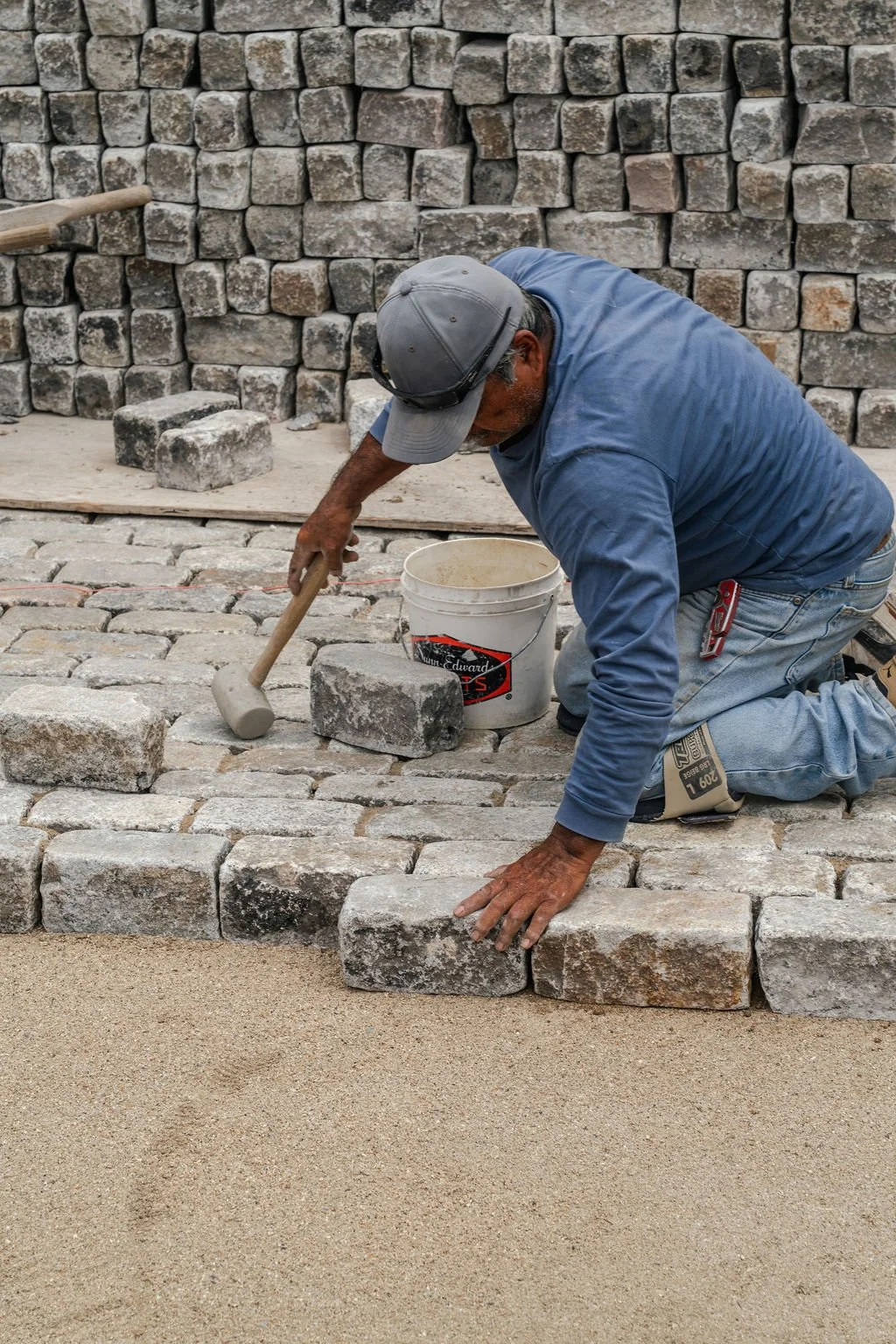
What the photographs capture and what words cannot fully convey is the sheer scale of individual decision-making involved in laying a surface like this. Each block arrives with its own dimensions, its own irregularities, its own personality. Before a single one is set into place it must be measured, assessed, and cut to fit its precise position in the overall composition.
There is no template or shortcut. There is only a craftsman on his knees, a mallet in hand, and an understanding of stone that takes years to develop. Multiplied across hundreds of individual blocks, the result is a surface that reads as effortless and inevitable, which is precisely what the most considered work always looks like when it is done well.
At West Coast GBC we believe that this level of attention is not reserved for the spaces that announce themselves. It belongs equally to the ones that simply welcome you home.
Architects: Luce et Studio, T7 Architecture
Landscape Architect: CDLA Design
Landscaping: Pine Ridge Landscaping
Pool: Mission Pools
Roof Tile: Ludowici
Metalwork: David Browne
Photographer: Mike Langer